Dual-wavelength laser tightens soft-palate tissue; studies show ~66% average snoring-index improvement with no downtime.
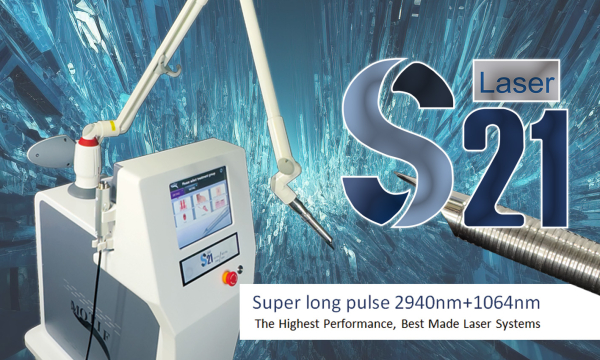
Many people ask how S21’s “Snoring Window” function actually improves snoring. The principle is very clear — it does not temporarily prop the airway open, but tightens from the root the soft tissue that causes snoring.
The sound of snoring arises from excessive laxity of the soft palate (tissue around the uvula) and the pharyngeal wall during sleep. When the airflow of breathing passes through, this lax tissue vibrates and produces the snoring sound. In severe cases, it may even obstruct the airway and lead to sleep apnoea.
S21 combines Er:YAG (2940 nm) and Nd:YAG (1064 nm) dual wavelengths, delivering energy with precision to the deep layers of the soft-palate tissue. This process has two core actions:
In medicine this technique is known as laser-assisted uvulopalatoplasty (LAUP). It has more than 30 years of clinical use and is recognised by the international medical community as a non-invasive snoring treatment.
According to a study of similar dual-wavelength laser treatment for sleep apnoea, after patients received 3 sessions of about 20 minutes each:
Another study further showed that 92.3% of patients had a significant reduction in snoring. The above data fully demonstrate that this laser technology has significant results in improving snoring and mild-to-moderate sleep apnoea.
Traditional snoring surgery (UPPP) is performed under general anaesthesia, with excess tissue excised — high trauma, high pain and a long recovery. S21 laser treatment is minimally invasive and non-invasive:
S21’s “Snoring Window” function uses dual-wavelength laser to tighten and remodel the soft-palate tissue, addressing from the root the snoring caused by tissue laxity. Its results are clinically proven, safe and reliable, and the process is comfortable, with no surgery required — an exceptionally good alternative to traditional surgery.
Dual wavelengths heat deep soft-palate collagen for immediate tightening and lasting remodelling.
After ~3×20-minute sessions, AHI improved ~66% on average in cited studies; many patients report marked snoring reduction.
Usually near painless; no general anaesthesia or incision. Mild throat dryness may resolve in hours.
Typically none — resume daily activity the same day.
Unlike UPPP under general anaesthesia, S21 is clinic-based, non-invasive and recovery-free.